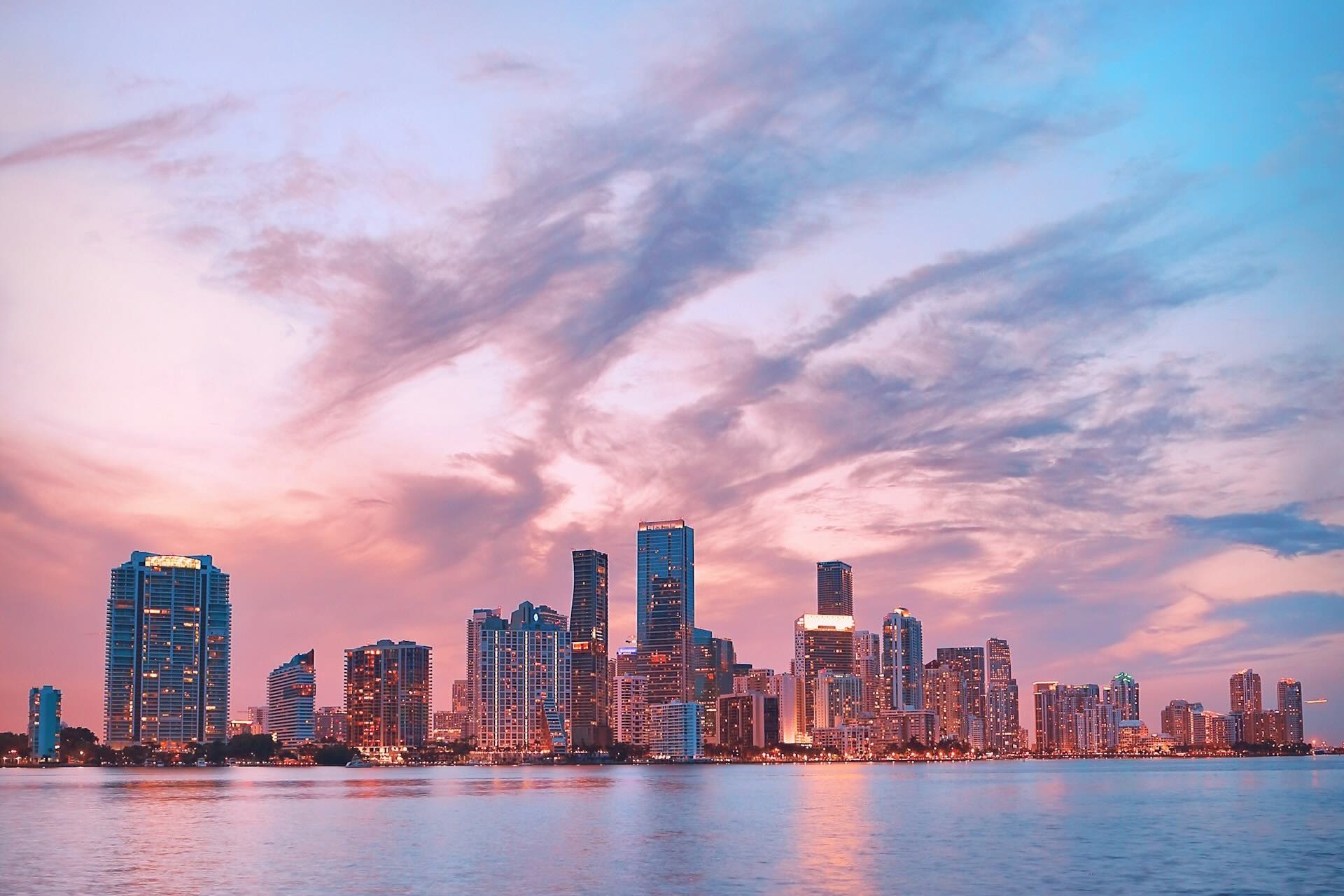
Over the past ten years, Miami has transformed from a cyclical, investor heavy market into a more mature, globally recognized real estate ecosystem.
The shift has been structural, not temporary.
A decade ago, Miami was often viewed as a second home or speculative market.
Today, it functions as a primary residence hub, a financial center, and a long term investment destination.
This evolution has changed how buyers behave, how developers build, and how the market responds to economic conditions.
At MAK Realty, we have seen this transformation firsthand.
Understanding it helps explain where the market stands today and where it is likely headed.
From Seasonal Market to Year Round City
Demand is no longer tied to winter cycles
Historically, Miami’s real estate market was heavily influenced by seasonal demand.
Winter brought activity.
Summer slowed down.
That pattern has weakened.
Today, Miami operates year round.
Permanent residents, corporate relocations, and international buyers create consistent demand across all seasons.
This shift stabilizes the market.
It reduces extreme peaks and troughs.
Full time residency has increased significantly
More buyers now live in Miami full time.
This changes everything.
End users evaluate properties differently than investors.
They prioritize layout, livability, and neighborhood quality.
As more residents commit long term, the market becomes less speculative and more stable.
The Rise of Brickell and Urban Living
Miami developed a true urban core
A decade ago, Miami lacked a fully developed urban residential center.
Brickell has since filled that role.
It is now a dense, walkable financial district with strong residential demand.
This type of environment did not exist at scale before.
Urban living attracts professionals and relocations.
It supports both rental and ownership demand.
Downtown followed with renewed relevance
Downtown Miami has also evolved.
New development, improved infrastructure, and cultural investment have reshaped the area.
The shift from investor driven ownership to end user demand reflects broader market maturity.
Together, Brickell and Downtown have created a more complete city.
International Capital Became More Influential
Miami strengthened its position as a global market
Miami has always attracted foreign buyers.
However, over the past decade, that influence has deepened.
Buyers from Latin America, Europe, and beyond view Miami as a stable place to allocate capital.
The U.S. legal framework and dollar based ownership add confidence.
Currency and global uncertainty played a role
Economic volatility in other regions has pushed capital toward Miami.
Real estate serves as both lifestyle and asset protection.
This global demand supports liquidity.
It also helps Miami recover faster than many domestic markets.
Waterfront Scarcity Became More Valuable
Buyers became more selective
Ten years ago, location mattered, but not with the same level of precision.
Today, buyers focus heavily on waterfront positioning, view protection, and building quality.
Scarcity has become more defined.
Oceanfront and bayfront properties command stronger premiums.
Interior inventory faces more competition.
Premium assets separate from the rest
The market now differentiates more clearly between top tier and average properties.
Not all luxury inventory performs equally.
At MAK Realty, we emphasize this distinction.
Asset selection has become more important than ever.
Developers Shifted Toward Quality and Experience
Design and livability improved
Older developments often focused on density and investor appeal.
Newer projects prioritize layout, light, and usability.
Buyers expect functional spaces, not just impressive finishes.
Outdoor living has also become more important.
Amenities evolved with buyer expectations
Wellness, privacy, and service now define luxury.
Buildings compete on experience rather than excess.
Developers have adapted to these expectations.
The result is a more refined product across the market.
Financing and Buyer Profiles Changed
More cash and international buyers entered the market
While financing still plays a role, a larger share of Miami’s luxury market involves cash buyers.
This reduces sensitivity to interest rate fluctuations.
International buyers often approach purchases differently.
They focus on capital preservation and diversification.
Mortgage rates influenced behavior, but not entirely
Rising rates impacted affordability in certain segments.
However, Miami’s diverse buyer base softened the impact.
Markets that rely heavily on financing tend to react more sharply.
Miami’s mix creates more balance.
Rental Market Became More Sophisticated
Short term rentals gained attention
Platforms and changing travel patterns increased interest in short term rentals.
Certain buildings and areas benefited significantly.
Long term demand strengthened with relocation
Corporate migration and full time residency increased demand for long term rentals.
This created a more stable rental base.
Investors now evaluate both strategies.
Flexibility has become an advantage.
Some buyers experience this firsthand by staying in a luxury vacation rental before purchasing.
It provides insight into demand and guest behavior.
The Market Became More Resilient
Less speculative, more disciplined
A decade ago, rapid price swings were more common.
Today, the market shows more balance.
That does not eliminate cycles.
However, it reduces extremes.
Buyers are more informed.
Developers are more strategic.
Investors are more selective.
Economic uncertainty is handled differently
Miami still responds to broader economic conditions.
However, its global demand and diversified buyer base provide support.
The market often adjusts through slower transactions rather than sudden declines.
This reflects maturity.
Neighborhood Differentiation Increased
Buyers became more targeted
Instead of viewing Miami as one market, buyers now analyze submarkets carefully.
Brickell, Miami Beach, Coconut Grove, Edgewater, and Sunny Isles each attract different buyer types.
This segmentation has become more defined.
Micro location drives performance
Within each neighborhood, building selection matters.
View orientation, management quality, and design influence outcomes.
The market rewards precision.
Why the Evolution Matters
Miami’s transformation over the past decade has created a more stable, more global, and more lifestyle driven market.
It is no longer defined by short term speculation.
It is defined by long term positioning.
For buyers and investors, this means decisions should focus on quality, location, and alignment with personal goals.
The fundamentals supporting Miami today are stronger than they were ten years ago.
Experience the Market as It Exists Today
Understanding Miami’s evolution requires seeing it in person.
The difference between past and present becomes clear on the ground.
Exploring neighborhoods, visiting buildings, and observing daily life provides real context.
Staying in a luxury vacation rental through MAK Vacation allows buyers to experience the city as it functions today, not as it existed years ago.
Planning your visit with TravelPal.ai helps organize an efficient way to explore multiple submarkets and understand how each one has evolved.
Miami’s real estate market has matured into a globally recognized, lifestyle driven, and structurally supported environment. MAK Vacation, MAK Realty, and TravelPal.ai each support a more informed approach to navigating that evolution, helping buyers align decisions with how the market actually functions today and where it is headed next.
Leave a Reply