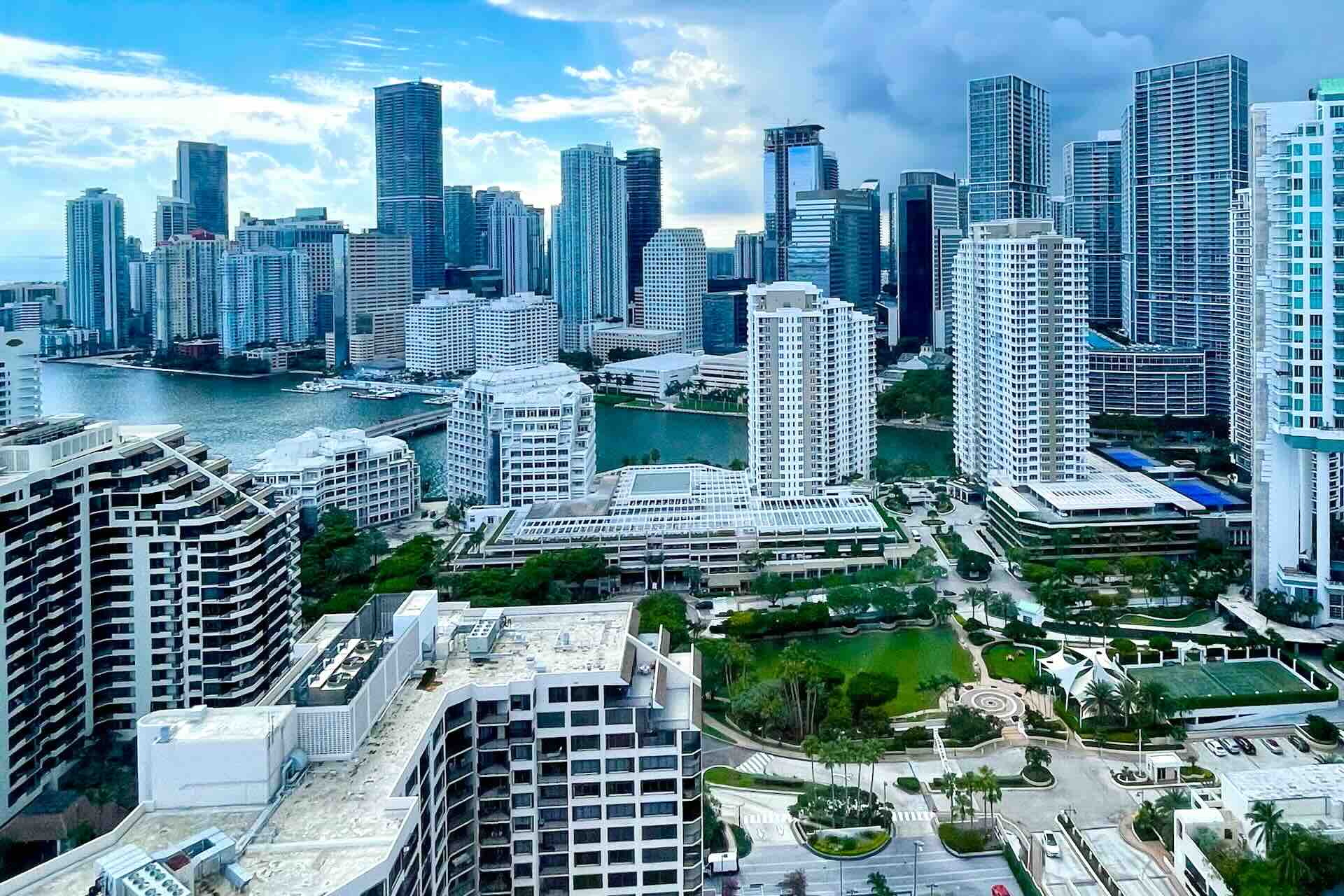
Tag: waterfront property Miami

  • How Miami Real Estate Performs During Economic Uncertainty

    How Miami Real Estate Performs During Economic Uncertainty

    Miami real estate does not operate like a typical U.S. housing market.
    During economic uncertainty, some markets weaken quickly because demand is narrow, financing is fragile, or inventory expands too fast.
    Miami usually responds differently.

    That does not mean Miami is immune to pressure.
    It means the market often has more support beneath it than buyers expect.
    Waterfront scarcity, global capital, domestic migration, and lifestyle demand all create a stronger foundation.

    At MAK Realty, we watch uncertainty through a practical lens.
    The question is not whether risk exists.
    The question is which parts of the market stay resilient, which parts soften first, and how buyers should respond.
    MAK Vacation and TravelPal.ai also reflect an important part of Miami’s strength, people keep coming back to the city even when the broader economy feels unsettled.

    This guide explains how Miami real estate performs during economic uncertainty and why the market often bends rather than breaks.

    Miami Does Not Depend on One Demand Source

    Diversified demand changes the way the market behaves

    Many housing markets rely heavily on one industry or one buyer type.
    If that local economy weakens, housing can soften fast.

    Miami draws from several demand streams at once.
    Primary residents relocate for tax and lifestyle reasons.
    Second home buyers want flexibility and weather.
    International buyers seek asset protection.
    Investors pursue rental income and long term appreciation.

    That layered demand matters during uncertain periods.
    If one buyer group becomes cautious, another may remain active.

    Global visibility supports continued interest

    Miami is not a regional story.
    It is a global one.

    Even when domestic headlines become negative, international buyers may still view Miami as attractive.
    For many, the city represents stability, dollar based ownership, and a recognizable luxury market.

    This broader buyer pool supports liquidity.
    Liquidity is one of the most important defenses during uncertain cycles.

    Waterfront Scarcity Provides Structural Protection

    Limited land matters more when confidence declines

    When markets become uncertain, buyers grow more selective.
    They focus on assets that feel defensible.

    In Miami, that usually means water.
    Oceanfront and bayfront inventory remains limited.
    The best views, best parcels, and best positions cannot be reproduced easily.

    Scarcity helps support pricing because buyers know these assets remain rare even in slower conditions.
    A generic unit may face pressure.
    A prime waterfront residence often holds up better.

    Premium assets usually soften less than commodity inventory

    Uncertainty tends to expose the difference between exceptional and average properties.
    That is true in every luxury market.

    Buildings with protected views, strong management, and lasting reputations often maintain more pricing power.
    Less differentiated inventory usually feels pressure first.

    At MAK Realty, we emphasize this point constantly.
    During uncertain periods, asset selection becomes even more important than timing.

    Cash Buyers Help Stabilize the Luxury Market

    Miami has a meaningful cash buyer base

    One reason Miami often performs better than expected is that a large share of the luxury market is not fully dependent on conventional financing.

    Cash buyers remain active in key segments.
    Some domestic buyers reallocate capital from other assets.
    Some international buyers move money into U.S. real estate.
    Some second home buyers simply want simplicity and speed.

    This matters because highly leveraged markets tend to react more dramatically when rates rise or sentiment weakens.
    Miami has leverage in parts of the market, but it also has significant cash participation.

    Lower financing dependence reduces forced selling

    When owners are less leveraged, they are less likely to panic sell.
    That creates more stability.

    A seller who does not need to move quickly can wait for the right buyer.
    That patience limits sudden inventory floods in the upper tier of the market.

    This does not eliminate corrections.
    It often makes them more orderly.

    Miami Benefits From Lifestyle Demand, Not Just Pure Investment Logic

    Buyers are purchasing more than real estate

    Some markets rely almost entirely on financial reasoning.
    Miami includes that, but it also includes emotional value.

    People want to live here.
    They want sunshine, boating, dining, beach access, and international energy.
    They want a city that feels both active and relaxed.

    Lifestyle driven ownership tends to be more durable.
    People who genuinely enjoy a property are less likely to sell because of temporary market anxiety.

    Second home demand often returns quickly

    Even when uncertainty slows activity, second home demand in Miami tends to remain part of the conversation.
    Buyers may pause, but they rarely disappear from the market permanently.

    They keep watching.
    They keep visiting.
    They keep comparing neighborhoods and buildings.

    Many of them eventually return when pricing feels more rational or when confidence improves.
    That repeat interest helps Miami recover faster than markets without strong lifestyle gravity.

    Rental Demand Adds Another Layer of Resilience

    Short term and long term demand both matter

    Miami benefits from multiple rental strategies depending on the property and building rules.

    Some areas and buildings support long term professional tenants.
    Others appeal to seasonal residents and flexible stay demand.
    Some condo hotel and hospitality aligned assets rely more on travel and tourism.

    This mix matters during uncertainty.
    If one segment softens, another may remain relatively stable.

    Extended stays and relocation traffic support absorption

    Economic uncertainty does not always stop people from moving.
    In some cases, it changes how they move.

    Instead of buying immediately, some households rent first.
    Some executives relocate and test neighborhoods before purchasing.
    Some international visitors extend stays to evaluate Miami more seriously.

    That behavior supports leasing demand.
    It also creates future buyers.

    MAK Vacation plays a role in that real world pattern because many people experience Miami through a luxury vacation rental before making larger ownership decisions.

    Pre Construction Responds Differently Than Resale

    New development can slow, but prime projects still attract buyers

    Economic uncertainty usually makes pre construction buyers more careful.
    They pay more attention to pricing, deposit schedules, and developer credibility.

    That is healthy.
    It often filters out weaker projects and rewards stronger ones.

    Well located developments with strong sponsorship and clear long term value can still perform well during uncertain phases.
    Speculative product with weak differentiation usually struggles more.

    Resale competition becomes more important

    When buyers hesitate, they compare pre construction more directly against resale alternatives.
    If finished inventory offers better value, pre construction must justify its premium more clearly.

    This creates a more disciplined environment.
    For smart buyers, that can be an advantage.

    Developers may become more flexible with structures and incentives.
    That can create opportunities for patient capital.

    Miami’s Market Usually Reprices Through Time Before It Reprices Through Panic

    Transactions may slow before values break

    One of the most important patterns in Miami is that uncertainty often affects transaction volume first.
    Buyers pause.
    Sellers test pricing.
    Time on market increases.

    That does not automatically mean values collapse.
    In many cases, the market adjusts through slower movement rather than dramatic price declines.

    This is especially true for better assets in stronger submarkets.

    Negotiation becomes more realistic

    Balanced or uncertain markets often improve the quality of decision making.
    Buyers have time to evaluate.
    Sellers become more grounded.

    That creates an environment where well informed buyers can negotiate more effectively without relying on distress.

    For long term investors, this is often where the best opportunities appear.
    Not in chaos, but in normalization.

    Which Areas Tend to Hold Up Best

    Prime waterfront and top tier luxury buildings

    The most defensible parts of the market usually include waterfront scarcity, brand recognition, privacy, and strong building execution.

    These properties appeal to buyers who are less rate sensitive and more focused on preservation of capital and quality of life.

    Established lifestyle neighborhoods with consistent demand

    Neighborhoods that offer a compelling full time living experience often remain resilient.
    That includes areas where buyers want to own regardless of short term market noise.

    Places with walkability, access, and strong identity tend to keep attracting attention even when broader sentiment weakens.

    What Buyers Should Do During Economic Uncertainty

    Focus on quality over excitement

    Uncertain markets are not the time to chase hype.
    They are the time to buy with discipline.

    Look for clear view value, strong locations, sound HOA financials, proven building management, and realistic pricing.
    Avoid relying on aggressive future assumptions.

    Think in longer horizons

    Miami usually rewards buyers who think beyond the next year.
    If the asset is strong and the ownership plan is rational, short term uncertainty often matters less than people think.

    Use uncertainty to improve entry, not to freeze

    The biggest mistake many buyers make is assuming uncertainty means they should do nothing.
    Often, it means they should become more selective and better prepared.

    That is a different mindset entirely.

    Why Miami Often Comes Out Stronger

    Economic uncertainty tends to test the quality of every market.
    Miami usually performs relatively well because it combines scarcity, visibility, lifestyle, and capital depth in one place.

    Not every building will thrive.
    Not every submarket will move equally.
    But the broader market has stronger support than many national headlines would suggest.

    That is why serious buyers and investors continue watching Miami even when sentiment turns cautious elsewhere.

    Spending time in the city often makes this clearer. Experiencing Miami through MAK Vacation helps buyers understand how the lifestyle and demand actually feel on the ground. Using TravelPal.ai can make it easier to explore multiple neighborhoods efficiently and compare how each one fits your goals. When you are ready to evaluate where resilience and long term value still exist, MAK Realty can help you identify the assets that are most likely to hold their strength when markets become uncertain.
  • Why High Net Worth Buyers Prefer Hard Assets

    Why High Net Worth Buyers Prefer Hard Assets

    High net worth buyers rarely rely on a single asset class.
    They build portfolios designed to preserve and grow wealth over time.

    Within those portfolios, hard assets play a central role.
    Real estate, land, and other tangible holdings provide a level of stability that paper assets alone cannot offer.

    This preference is not driven by trend.
    It is driven by experience.

    At MAK Realty, we work with buyers who view real estate not just as a purchase, but as a long term store of value.
    Understanding why hard assets matter helps explain how sophisticated investors think.

    This guide explores why high net worth buyers continue favoring hard assets and how that mindset applies to markets like Miami.

    Tangibility Creates Psychological and Financial Stability

    Hard assets are physical.
    They exist independent of market sentiment.

    Stocks and digital assets can fluctuate rapidly based on perception.
    Real estate moves more gradually.

    This does not eliminate risk.
    However, it reduces volatility.

    Ownership of a physical asset provides a different level of confidence.
    Investors can see, use, and control the property.

    For many high net worth buyers, this tangible connection reinforces long term holding discipline.

    Inflation Protection Through Replacement Cost

    Inflation erodes purchasing power.
    Hard assets often respond differently.

    Real estate values tend to rise alongside construction costs.
    Labor and material inflation increase replacement cost.

    This creates a natural floor under property pricing over time.
    New construction becomes more expensive, supporting existing inventory.

    Rental income may also adjust upward with inflation.
    This can help offset rising expenses.

    High net worth investors often allocate to hard assets as part of an inflation conscious strategy.

    Limited Supply Supports Long Term Value

    Scarcity is one of the most important drivers of value.
    Hard assets often benefit from supply constraints.

    Waterfront real estate in Miami is a clear example.
    Oceanfront and bayfront land cannot expand.

    As demand increases, limited supply supports pricing.
    This dynamic becomes more pronounced in globally recognized markets.

    High net worth buyers understand that rare assets tend to retain value more effectively.
    They prioritize properties that cannot easily be replicated.

    Scarcity is a long term advantage.

    Income Generation Adds Another Layer

    Unlike some asset classes, real estate can produce income.

    Rental properties generate cash flow while also offering appreciation potential.
    This dual benefit is attractive.

    Short term and long term rental strategies provide flexibility.
    Income can be adjusted based on market conditions.

    In Miami, tourism and corporate migration support rental demand.
    This creates multiple income pathways.

    Many investors evaluate rental performance firsthand by staying in a luxury vacation rental before purchasing.

    Understanding the guest experience helps refine expectations.

    Control Over the Asset

    Hard assets provide a level of control that financial assets do not.

    Owners can improve, reposition, or manage property directly.
    Strategic upgrades can increase value.

    Leasing strategy, management quality, and operational decisions all influence performance.
    Investors are not entirely dependent on external market forces.

    This control allows for active decision making.
    High net worth buyers often value that flexibility.

    It enables them to respond to changing conditions rather than simply react.

    Diversification Beyond Financial Markets

    Diversification is a core principle of wealth management.

    Hard assets offer exposure outside of traditional financial markets.
    They do not always move in direct correlation with stocks or bonds.

    This reduces overall portfolio volatility.
    It creates balance.

    During periods of financial market uncertainty, real estate can provide relative stability.
    That stability becomes more valuable in volatile environments.

    High net worth investors rarely rely solely on market based assets.
    Hard assets provide an important counterbalance.

    Global Demand Enhances Liquidity in Key Markets

    Not all hard assets offer the same liquidity.
    Location matters.

    In globally recognized markets such as Miami, real estate benefits from international demand.
    Buyers come from multiple regions.

    This broad buyer pool improves resale potential.
    Liquidity becomes stronger.

    High net worth investors often focus on assets that combine tangibility with market depth.
    Miami real estate fits that profile.

    At MAK Realty, we evaluate both asset quality and buyer demand when advising clients.

    Lifestyle Integration Increases Holding Power

    Hard assets can provide both financial and personal value.

    A waterfront residence offers lifestyle benefits alongside investment potential.
    Owners can use the asset while it appreciates.

    This dual purpose encourages longer holding periods.
    Investors are less likely to sell during short term market fluctuations.

    Lifestyle alignment strengthens commitment.
    That commitment can improve long term outcomes.

    For many buyers, the combination of use and value is a key advantage.

    Leverage Opportunities

    Real estate allows for strategic use of leverage.

    Borrowing against an asset can enhance returns when managed correctly.
    Financing structures vary depending on the property and buyer profile.

    High net worth individuals often use leverage selectively.
    They balance risk and return carefully.

    Access to financing also improves liquidity.
    Capital can remain invested elsewhere while real estate ownership is maintained.

    This flexibility adds another layer to the appeal of hard assets.

    Why Miami Fits the Hard Asset Strategy

    Miami real estate aligns well with the preferences of high net worth buyers.

    Waterfront scarcity, global demand, and lifestyle appeal all contribute.
    The market offers both tangible value and strong visibility.

    International buyers continue allocating capital to Miami.
    The city functions as both a lifestyle destination and a financial hub.

    These characteristics support long term demand.
    They reinforce the role of real estate as a core portfolio asset.

    High net worth buyers often prioritize markets with these attributes.
    Miami consistently meets the criteria.

    Experience the Asset Before Investing

    Understanding hard assets requires more than financial analysis.
    Physical experience matters.

    Walking a property, viewing the water, and spending time in the neighborhood provide perspective that data cannot capture.

    Staying in a luxury vacation rental through MAK Vacation allows buyers to experience Miami’s lifestyle and demand environment firsthand.

    Planning your visit with TravelPal.ai helps organize an efficient exploration of different neighborhoods and property types.

    High net worth buyers prefer hard assets because they offer stability, control, income potential, and long term value. MAK Vacation, MAK Realty, and TravelPal.ai each support a more informed approach to evaluating these investments, helping buyers align financial strategy with real world experience and long term positioning.

  • Why Miami Is Attracting High Net Worth Relocations

    Why Miami Is Attracting High Net Worth Relocations

    Miami has shifted from a seasonal destination into a permanent base for high net worth individuals.
    Relocation is no longer temporary.
    It is strategic.

    Affluent buyers are not moving to Miami for a single reason.
    They are responding to a combination of tax efficiency, lifestyle quality, global connectivity, and investment positioning.

    This convergence has transformed the city into one of the most attractive relocation markets in the United States.

    At MAK Realty, we work with buyers who are making long term decisions about where to live, invest, and allocate capital.
    Miami continues to check the right boxes.

    This guide explains why high net worth individuals are relocating to Miami and why the trend is likely to continue.

    Tax Efficiency Remains a Core Driver

    Florida’s lack of state income tax continues influencing relocation decisions.
    For high earners, the financial impact is meaningful.

    Relocating residency can significantly reduce overall tax burden.
    This alone can justify the move for many individuals.

    Compared to high tax states such as New York and California, Miami offers a more efficient structure.
    That difference compounds over time.

    Tax efficiency does not act alone.
    It works alongside lifestyle and business considerations.

    A True Lifestyle Upgrade

    Miami offers a lifestyle that aligns with how affluent buyers want to live.

    Year round warm weather supports outdoor living.
    Boating, dining, and wellness become part of daily routine.

    Waterfront living creates a sense of openness and escape.
    Luxury residences emphasize terraces, views, and indoor outdoor flow.

    The city also offers a mix of energy and calm.
    Neighborhoods like Brickell deliver urban intensity.
    Areas such as Coconut Grove and Bal Harbour provide quieter environments.

    Lifestyle is no longer secondary.
    For many buyers, it is central.

    Business and Financial Ecosystem Growth

    Miami’s economic profile has changed significantly.

    Financial firms, private equity groups, and technology companies have expanded into the city.
    Brickell has become a serious business hub.

    This shift allows high net worth individuals to relocate without sacrificing professional opportunity.
    In some cases, it enhances it.

    Entrepreneurs also benefit from Miami’s growing network of capital and talent.
    The city supports both lifestyle and business simultaneously.

    This dual advantage has accelerated relocation trends.

    Global Connectivity and Accessibility

    Miami functions as an international gateway.

    Direct flights connect the city to Latin America, Europe, and major U.S. markets.
    Travel remains efficient.

    Cultural familiarity also plays a role.
    Miami operates as a multilingual, globally influenced city.

    International buyers often feel comfortable relocating here.
    That comfort reduces friction.

    Global accessibility supports both business and lifestyle.
    It makes Miami a practical base, not just a destination.

    Luxury Real Estate That Meets Global Standards

    Miami’s luxury inventory has evolved significantly.

    Developers now deliver residences that compete with global markets.
    Branded towers, high end amenities, and refined design are standard.

    Private elevators, concierge services, wellness spaces, and large terraces attract sophisticated buyers.
    Expectations have risen.

    High net worth individuals expect a certain level of quality.
    Miami now consistently delivers it.

    At MAK Realty, we help clients identify properties that meet both lifestyle and long term investment criteria.

    Waterfront Scarcity Enhances Appeal

    Waterfront real estate remains one of the most desirable asset types globally.
    Miami offers limited supply.

    Oceanfront and bayfront properties cannot be replicated easily.
    Scarcity supports long term value.

    High net worth buyers understand this dynamic.
    They often prioritize view protection and location over size alone.

    Waterfront exposure combines emotional appeal with financial logic.
    That combination is powerful.

    Privacy and Security Matter More Than Ever

    Affluent buyers increasingly prioritize privacy.

    Luxury buildings in Miami have adapted to this demand.
    Private elevator access, controlled entry, and discreet service have become standard.

    Security and anonymity are part of the value proposition.
    Buyers want to enjoy the city without unnecessary exposure.

    Developers and operators have responded accordingly.
    Privacy now sits at the core of true luxury.

    Flexible Living and Remote Work

    Work patterns have changed.

    High net worth individuals no longer need to be in one location year round.
    Miami benefits from this flexibility.

    Residences are now designed to support both living and working.
    Dedicated office spaces and high speed connectivity are expected.

    Many buyers begin by spending extended time in the city before relocating fully.
    Staying in a luxury vacation rental often serves as a trial period.

    Experiencing daily life helps confirm the decision.

    Strong Investment Fundamentals

    Relocation decisions often include an investment component.

    Miami offers several structural advantages.
    Global demand supports liquidity.

    Waterfront scarcity supports long term value.
    Corporate migration strengthens rental demand.

    Tax efficiency enhances overall financial positioning.
    These factors work together.

    High net worth buyers rarely separate lifestyle from investment.
    They look for alignment.

    Miami provides that alignment.

    Community and Cultural Growth

    Miami’s cultural profile has expanded.

    Art, dining, fashion, and global events contribute to the city’s identity.
    The Design District and other areas continue evolving.

    This cultural depth attracts a global audience.
    Affluent buyers want access to experiences, not just property.

    The city now offers both.
    That balance strengthens long term appeal.

    Why the Trend Continues

    Relocation trends rarely reverse quickly when driven by structural factors.

    Miami benefits from tax advantages, lifestyle appeal, business growth, and global visibility.
    These drivers remain intact.

    As long as these fundamentals persist, high net worth relocation will continue.
    The market has shifted permanently.

    Buyers are no longer testing Miami.
    They are committing to it.

    Experience Miami Before Making the Move

    Relocating to Miami is a major decision.
    Understanding the city requires time on the ground.

    Exploring different neighborhoods helps clarify which areas align with your lifestyle.
    Each district offers a different experience.

    Staying in a luxury vacation rental through MAK Vacation allows you to experience Miami in a more realistic way before committing to ownership.

    Planning your visit with TravelPal.ai helps organize an efficient itinerary across key residential areas.

    Miami continues attracting high net worth relocations because it combines tax efficiency, lifestyle, and long term investment value. MAK Vacation, MAK Realty, and TravelPal.ai each support a more informed approach to evaluating the city, one that prioritizes experience, clarity, and strategic decision making.

  • Mortgage Rates Below 6%, What This Means for Miami Investors

    Mortgage Rates Below 6%, What This Means for Miami Investors

    Mortgage rates falling below 6% changes market psychology immediately.
    It does not automatically create a frenzy, but it shifts momentum.

    For Miami investors, lower borrowing costs influence leverage strategy, absorption rates, and negotiation dynamics.
    Timing becomes more important.

    When rates decline after a stabilization phase, capital reenters selectively.
    Buyers who paused during higher rate periods begin re evaluating opportunities.

    At MAK Realty, we monitor rate movements alongside inventory levels and buyer activity.
    The combination determines whether an inflection point is forming.

    This guide explains what sub 6 percent mortgage rates mean specifically for Miami luxury real estate investors.

    Lower Rates Expand Purchasing Power

    A decline below 6 percent increases affordability.
    Monthly payment calculations improve immediately.

    Investors using leverage can qualify for larger loan amounts.
    Debt service coverage ratios strengthen.

    This effect is more pronounced in mid market and entry luxury segments.
    Ultra luxury cash buyers remain less rate sensitive.

    As financing becomes more accessible, sidelined buyers return.
    Absorption rates often accelerate.

    Miami’s inventory composition determines how strong this effect becomes.

    Investor Psychology Shifts Quickly

    Rate reductions signal easing financial pressure.
    Confidence improves.

    Buyers who delayed decisions often re engage simultaneously.
    Competition can increase within weeks.

    Miami historically responds quickly to rate shifts.
    International capital watches U.S. borrowing costs closely.

    When financing improves, momentum builds fastest in buildings with strong rental flexibility and proven liquidity.

    Investors who move early may capture pricing before renewed competition intensifies.

    Impact on Pre Construction Projects

    Pre construction projects benefit from improved financing sentiment.
    Buyers feel more comfortable committing to staged deposits.

    Lower projected closing rates increase comfort with future mortgage payments.
    Developers may see faster contract velocity.

    However, deposits remain largely cash based.
    Liquidity planning still matters.

    If rates remain stable below 6 percent, confidence in closing conditions strengthens.
    That stability supports presale activity.

    MAK Realty evaluates whether new launches are priced aggressively relative to stabilized resale inventory.

    Rental Yield and Leverage Strategy

    Lower mortgage rates improve leveraged returns.
    Debt service consumes less gross rental income.

    Short term rental investors may see stronger cash flow projections.
    Annual rental properties also benefit.

    However, underwriting should remain conservative.
    Occupancy and rate volatility still apply.

    A lower rate environment does not eliminate market cycles.
    It enhances flexibility.

    Investors must balance improved leverage with disciplined acquisition pricing.

    Inventory Levels and Negotiation Leverage

    If rates drop while inventory remains elevated, buyers hold negotiation power.
    If rates drop and inventory tightens, competition increases quickly.

    Miami currently reflects micro market variation.
    Some submarkets carry higher months of supply.

    Waterfront and premium branded buildings often maintain tighter inventory.
    Rate driven demand flows first into these segments.

    Timing entry relative to inventory conditions matters as much as rate levels.

    MAK Realty tracks absorption by building rather than relying solely on regional averages.

    Second Home and International Buyers

    Second home financing typically requires larger down payments.
    Lower rates still influence affordability.

    International buyers using portfolio loans may benefit from improved terms.
    Cash buyers gain indirect advantages from stronger overall demand.

    If financing conditions improve broadly, liquidity strengthens.
    Resale pools expand.

    Lower rates also increase appeal for extended stays.
    Some buyers test markets by staying in a luxury vacation rental before transitioning into ownership.

    Improved financing confidence often accelerates these transitions.

    Comparing Miami to National Markets

    When mortgage rates fall nationally, not all markets respond equally.

    Miami benefits from structural demand drivers.
    Tax advantages and migration support absorption.

    Waterfront scarcity and global branding enhance pricing resilience.
    These fundamentals amplify rate driven momentum.

    In markets with oversupply, lower rates may simply stabilize pricing.
    In Miami, they can reignite growth within select segments.

    Understanding submarket differentiation remains essential.

    Risks to Consider

    Rate reductions can reverse.
    Volatility remains possible.

    If rates fall due to broader economic weakness, rental demand may soften simultaneously.
    Macroeconomic context matters.

    Investors should avoid over leveraging solely because borrowing costs decline.
    Cash reserves protect long term stability.

    Disciplined underwriting remains critical even in favorable rate environments.

    Who Benefits Most

    Leveraged investors targeting stabilized rental properties benefit immediately.
    Mid market luxury buyers gain expanded purchasing power.

    Pre construction participants gain closing comfort.
    Developers see improved presale velocity.

    Cash buyers benefit indirectly through stronger liquidity at resale.
    Rate shifts influence market depth.

    Investors positioned early often outperform those who wait for momentum headlines.

    Strategic Approach in a Sub 6 Percent Environment

    Buyers should review financing options proactively.
    Locking favorable terms may provide competitive advantage.

    Analyze rental yield assumptions carefully.
    Lower rates improve projections but do not replace due diligence.

    Prioritize buildings with strong HOA reserves and proven resale performance.
    Quality remains paramount.

    MAK Realty guides clients toward assets positioned for resilience rather than short term excitement.

    Experience the Market Before Acting

    Rate movements create urgency.
    Clarity still requires on the ground experience.

    Spending time in target neighborhoods strengthens underwriting confidence.
    Short visits rarely reveal full context.

    Staying in a luxury vacation rental through MAK Vacation allows you to evaluate demand patterns and lifestyle alignment firsthand.

    Planning your visit with TravelPal.ai helps structure efficient property tours across Miami Beach, Brickell, and emerging submarkets.

    Mortgage rates falling below 6 percent can shift momentum in Miami real estate, particularly for leveraged investors. Staying in a luxury vacation rental through MAK Vacation allows you to assess demand and lifestyle before committing, while planning your visit with TravelPal.ai ensures efficient exploration. When you are ready to evaluate opportunities in this changing rate environment, connect with MAK Realty for disciplined guidance aligned with long term capital preservation and growth.