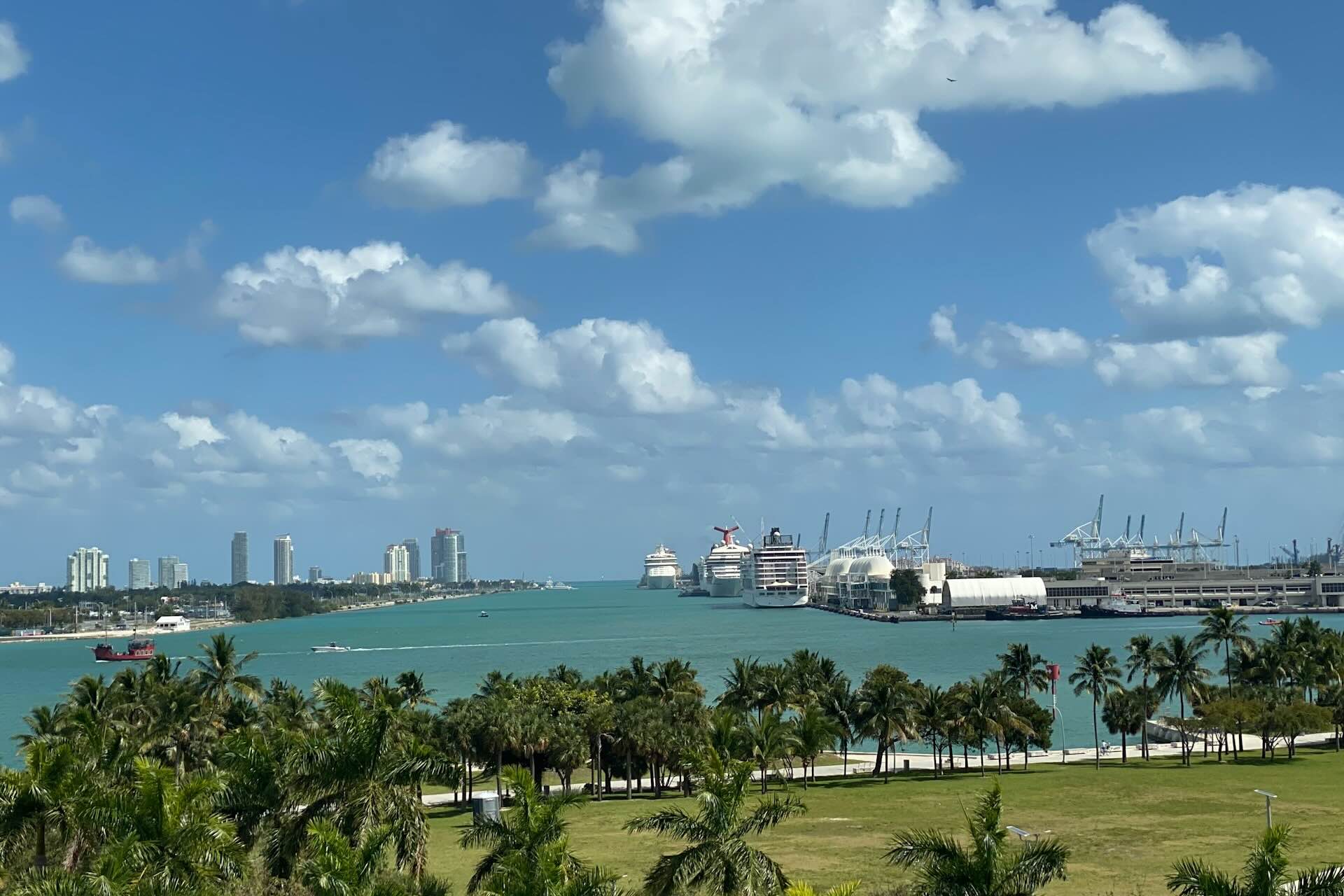
Why Miami Remains the Top U.S. Market for Foreign Buyers comes down to more than sunshine, tax policy, or brand recognition. Miami continues to attract foreign buyers because it offers a rare mix of global familiarity, asset protection appeal, lifestyle value, and real estate optionality. Many U.S. markets can offer one or two of those things. Miami offers all of them at once, and that combination is what keeps the city at the center of international demand. Miami REALTORS reported in January 2026 that Miami remains the No. 1 U.S. market for foreign homebuyers, with South Florida foreign buyer share at 15 percent of residential dollar volume in 2025, far above the U.S. average.
That matters because foreign buying is not driven by one simple motive. Some buyers want a second home. Others want a dollar denominated asset. Some are planning family mobility, education, or business expansion. Others are looking for a more stable place to hold capital. Miami works unusually well for all of those goals, which is why it continues to outperform many other U.S. cities in the international buyer conversation. Commentary published in early 2026 also points to Miami’s continuing pull for Latin American capital, luxury demand, and cash heavy transactions.
For MAK Vacation, this matters because many foreign buyers first experience Miami through short stays and neighborhood comparison. For MAK Realty, it goes directly to the heart of the business, since the city’s long term advantage is not only transactional. It is structural. TravelPal.ai fits naturally here too, because international buyers often begin with travel, then move into deeper lifestyle evaluation once the city starts making sense on the ground.
Miami feels globally legible in a way many U.S. markets do not
One of Miami’s biggest strengths is that it feels internationally understandable. For foreign buyers, that matters more than many domestic observers realize. The city is bilingual in practice, highly multicultural, and deeply accustomed to international capital, international families, and cross border business. That reduces friction.
A buyer coming from Latin America, Europe, or parts of the Middle East is often not only evaluating price per square foot. They are evaluating whether the city feels navigable, connected, and culturally comfortable. Miami performs very well on that test. The city has enough international familiarity that buyers do not feel like they are entering an entirely foreign operating system.
That kind of global legibility supports confidence. Confidence supports transactions. Over time, that becomes one of the strongest self reinforcing advantages a market can have.
Foreign buyers are not only buying homes, they are buying protection
A second major reason Miami remains the top U.S. market for foreign buyers is that many international purchases are not purely lifestyle decisions. They are also capital protection decisions.
Real estate in Miami can function as a hedge against political instability, currency weakness, legal unpredictability, or financial concentration in a buyer’s home country. That does not mean every international purchase is defensive. It does mean Miami benefits when the world feels volatile. In those periods, buyers often place even more value on U.S. property rights, dollar exposure, and a market with a long history of global demand.
This is one reason Miami’s foreign buyer story remains durable. It is not dependent only on leisure. It is also tied to security, diversification, and optionality.
Florida’s tax environment still strengthens the case
Florida’s tax structure continues to matter. For many foreign buyers, the absence of a state income tax is not the only issue, but it is still part of the appeal. It reinforces the broader sense that Florida is a friendlier place to hold property and spend meaningful time than some higher tax coastal alternatives.
That matters especially for buyers who are not only purchasing a vacation property, but considering longer seasonal occupancy, family use, or partial relocation over time. A market becomes much more attractive when the ownership story remains efficient after the purchase itself.
Miami benefits because it combines that Florida advantage with a much stronger international lifestyle profile than many other cities in the state.
The luxury market remains active enough to support international confidence
Foreign buyers tend to watch momentum closely. They want to know that the market they are entering still has activity, liquidity, and a real future, especially at the higher end. Miami continues to show those signals.
Recent 2026 market commentary points to strong $1 million plus condo activity, continuing luxury demand, and stable to improving market dynamics in parts of the city. That matters because international buyers do not only want prestige. They also want to know the market still behaves like a serious market.
This is also where Miami’s variety helps. Buyers are not forced into a single luxury template. They can choose oceanfront glamour, private island exclusivity, family oriented enclaves, more urban towers, or design driven districts. That range makes the market more resilient because it can satisfy different buyer motives at once.
Miami offers lifestyle depth, not just weather
A lot of cities have warm weather. Fewer have warm weather plus beach access, global dining, boating culture, nightlife, design, shopping, and a real sense of international relevance. Miami continues to attract foreign buyers because it offers more than climate. It offers lifestyle depth.
That matters because many international purchasers are buying for mixed use. They want a home that can work as an investment, a vacation property, a family base, or a future relocation option. A city with real lifestyle depth supports all of those possibilities better than a city built on one main attraction.
This is one reason Miami often wins even when other Florida markets become more visible. Naples may rise as a quiet luxury alternative, and Palm Beach may dominate certain prestige conversations, but Miami remains the broadest and most globally versatile foreign buyer market in the state.
New construction and condo product continue to matter
Foreign buyers have long been important participants in Miami’s condo and new construction story. That remains true because the product itself often matches what international buyers want: newer buildings, lock and leave convenience, amenity packages, and a more straightforward ownership model than some single family alternatives.
Miami REALTORS reported that international buyers purchased 49 percent of new South Florida construction, pre construction, and condo conversion sales over an 18 month period ending in July 2025. That is a powerful signal because it shows that foreign demand is not sitting on the margins. It is directly shaping the inventory mix that comes to market.
This is one reason Miami remains so hard to displace. The city is not only receiving foreign demand. It is building product that continues to serve it.
Latin American capital remains central, but Miami’s appeal is broader now
Latin American capital remains one of the biggest pillars of Miami’s foreign buyer base. That is still a defining part of the market. Geography, language, business ties, and long standing migration patterns all reinforce it.
At the same time, Miami’s appeal is broader now than it once was. The city increasingly competes as a general global luxury market, not only as a Latin American safe haven. That distinction matters because it widens the demand base and strengthens the city’s long term position.
A market that depends too narrowly on one foreign buyer channel can become vulnerable. Miami remains strong in part because the story has expanded.
International buyers are often introduced to Miami through travel first
One of the more important practical truths is that many foreign buyers do not begin with a purchase. They begin with a stay. They come for a short visit, a winter season, a design trip, a family week, or a business and leisure crossover stay. Then the neighborhood comparisons start. Then the questions deepen.
This is exactly where MAK Vacation and MAK Realty naturally connect. A short stay in Miami Beach, Brickell, Coconut Grove, Wynwood, or another district often becomes a live test of lifestyle fit. People discover whether they care more about waterfront calm, city energy, walkability, or privacy. That discovery process often leads directly into real estate interest.
TravelPal.ai fits that same pattern. Better travel planning does not only improve the trip. It can also sharpen how a future buyer understands the city.
Miami’s advantage is not one thing, it is the stack
The easiest mistake is trying to explain Miami’s foreign buyer dominance with one reason. It is not just taxes. It is not just weather. It is not just currency protection. It is not just Latin America. It is the stack of advantages.
Miami feels international. It offers protection value. It has strong luxury momentum. It has broad product diversity. It offers real lifestyle depth. It keeps attracting capital because each one of those strengths reinforces the others. That is much harder for rival markets to replicate than any single feature on its own.
This is why Miami remains the top U.S. market for foreign buyers rather than merely one of several contenders.
Final Take
Why Miami Remains the Top U.S. Market for Foreign Buyers comes down to durability. The city continues to win because it solves several problems at once. It gives international buyers a globally legible city, a dollar based real estate market, tax efficiency, luxury depth, and a wide range of property choices that can support both lifestyle and capital goals. Current industry reporting in 2026 continues to place Miami at the top of the U.S. foreign buyer conversation.
That leadership is not accidental. It is the result of geography, culture, product, and perception all working together. For MAK Vacation, that means more guests will continue to use travel as their first introduction to Miami. For MAK Realty, it means the city’s international demand story remains one of its strongest long term strengths. TravelPal.ai helps bridge those two worlds by turning a visit into a more intelligent understanding of where and how Miami fits.